
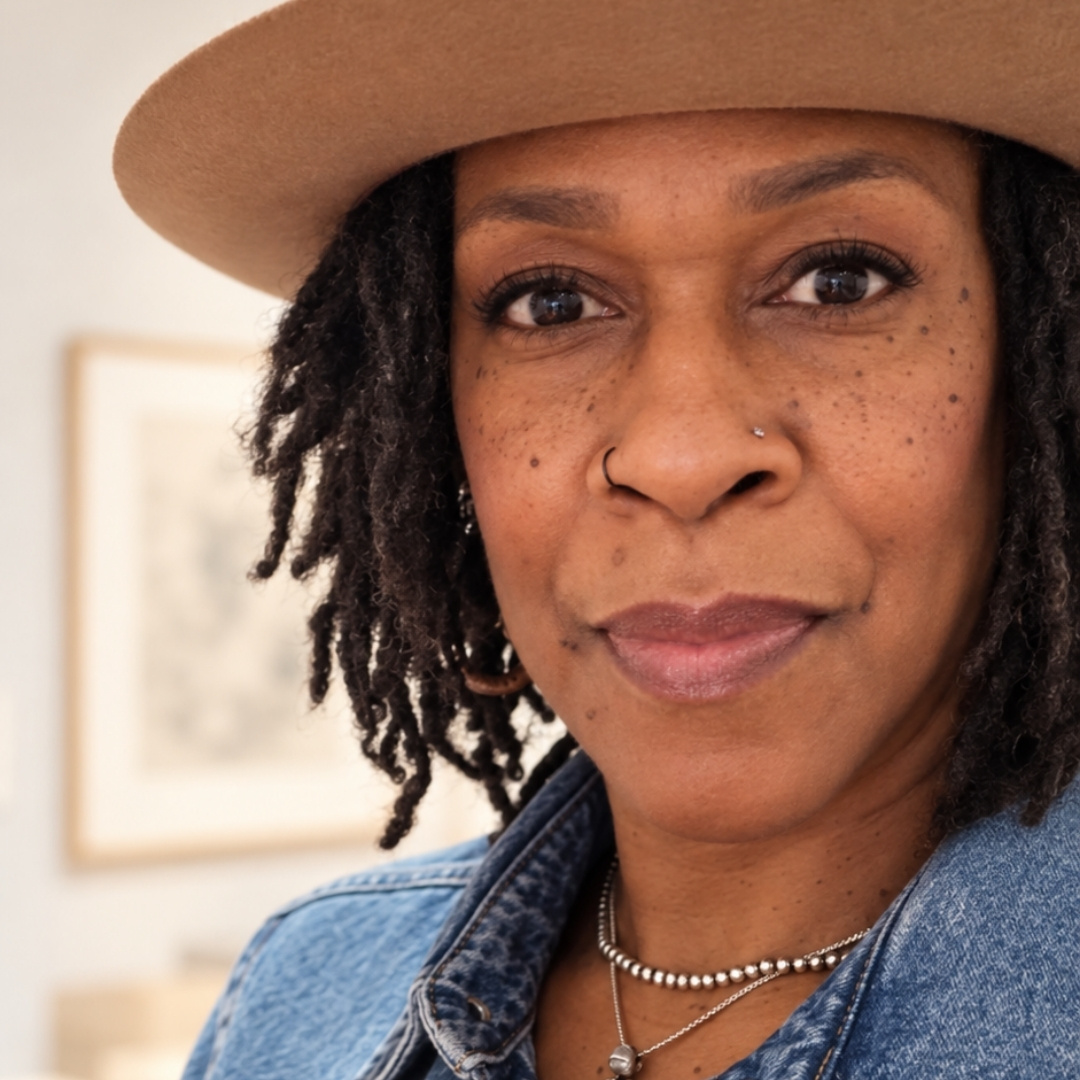

Photo: Lisa D. Daniels
Photo: Lisa D. Daniels
Lisa D. Daniels
In July 2012, Lisa D. Daniels’s youngest son, Darren, was killed by gun violence. His death forced Lisa to confront a grief she could never have imagined, and a more unexpected pain: the anger she felt toward her own son for the choices that had cost him his life. While forgiveness came naturally to her toward the man convicted of Darren’s murder, learning to forgive Darren became a more complicated journey.
My youngest son Darren was 25 years old when he was killed by gun violence in July 2012.
There are moments when life does not gradually change. It splits.
Before Darren died, my life was familiar in the way life can be when you are holding many things at once: family, work, worry, hope, and love. Like many mothers, I carried dreams for my children that were larger than what I could control. I wanted them safe. I wanted them whole. I wanted their lives to have room for more than survival.
Darren was funny, complicated, loved, and human. He was not perfect, and I have never needed to pretend that he was. But he was mine. He had a smile, a history, children who needed him, a future I still imagined, and people who loved him beyond measure.
After Darren died, I entered a world I did not know how to live in. The shock was physical. My body carried what my mind could not fully understand. I remember trying to make sense of the impossible while also confronting how quickly the world can reduce a life to a headline, a record, an incident, a few lines in a story.
That was one of the first harms after the harm.
Darren’s death was devastating enough. Then I had to watch his humanity get flattened. I heard and read versions of him that made it easier for people to turn away. I knew the truth was more complicated. I also knew that truth did not cancel love.
People often assume forgiveness began for me as a struggle to forgive the man convicted of Darren’s murder. But forgiveness never felt unnatural to me. In fact, forgiving the man convicted of Darren’s murder felt natural from the beginning. When the time came, I chose to ask for leniency for him. I do not say that because accountability did not matter to me. It mattered deeply. I said it because I could not reconcile honoring Darren’s humanity while denying the humanity of another person.
The harder part came later, when I realized my anger was not directed where people might assume it would be. I was angry with Darren. Angry about the choices he made that cost him his life, cost his children their father, and placed my life in a turmoil I never could have imagined. That was the rub: making room to forgive my own child without pretending his choices had not changed everything.
That was a different kind of pain.
It is hard to say you need to forgive someone you love deeply. It can feel like betrayal. But telling the truth about that anger did not mean I loved Darren less. It meant I was allowing my love to be honest.
I had to hold the fullness of him: the son I adored, the father his children lost, the man who made choices, and the human being whose life still mattered beyond those choices.
That changed how I understood forgiveness.
For me, forgiveness is not forgetting. It is not excusing. It is not pretending something did not break. Forgiveness has become a practice of refusing to let harm have the final word over my spirit.
Some days that practice has looked like compassion. Some days it has looked like boundaries. Some days it has looked like telling the truth without needing that truth to destroy anyone else. Other days it has meant releasing the people I love from the impossible burden of being remembered only through my pain.
I learned silence early. As a child, I often observed more than I spoke. I noticed the room. I noticed people’s moods. I noticed when it felt safer to stay quiet.
Darren’s death changed how I used my voice, my sense of justice and my understanding of healing.
The little girl who learned to be quiet became a woman who now speaks about harm, accountability, grief, repair, and humanity. Not because I have answers for everyone else, but because I know what it cost me to find my own.
Over time, my private grief became public work. In 2016, I founded the Darren B. Easterling Center for Restorative Practices in my son’s memory. Through that work, I have sat with people who have caused harm, people who have survived harm, people returning home from prison, and women carrying losses no one should have to carry.
I still miss my son. I still wonder who he would be now. I still carry the ache of his absence.
But I also carry the life that grew from loving him. I carry the work that bears his name. I carry the belief that healing belongs in every conversation about harm.
My life is not my own because Darren’s life continues to call me into purpose. It is not my own because the choices I make after loss ripple beyond me. It is not my own because forgiveness, as I understand it now, is not a single act. It is a way of staying connected to my own humanity while refusing to give up on anyone else’s.
Lisa founded the Darren B. Easterling Center for Restorative Practices in her son’s memory. Today she serves on the Illinois Sentencing Advisory Council (SPAC) and the Council on Criminal Justice, playing an instrumental role in shaping policies that foster equitable justice.


