
Photo:Michal Amir for the BBC
Photo:Michal Amir for the BBC

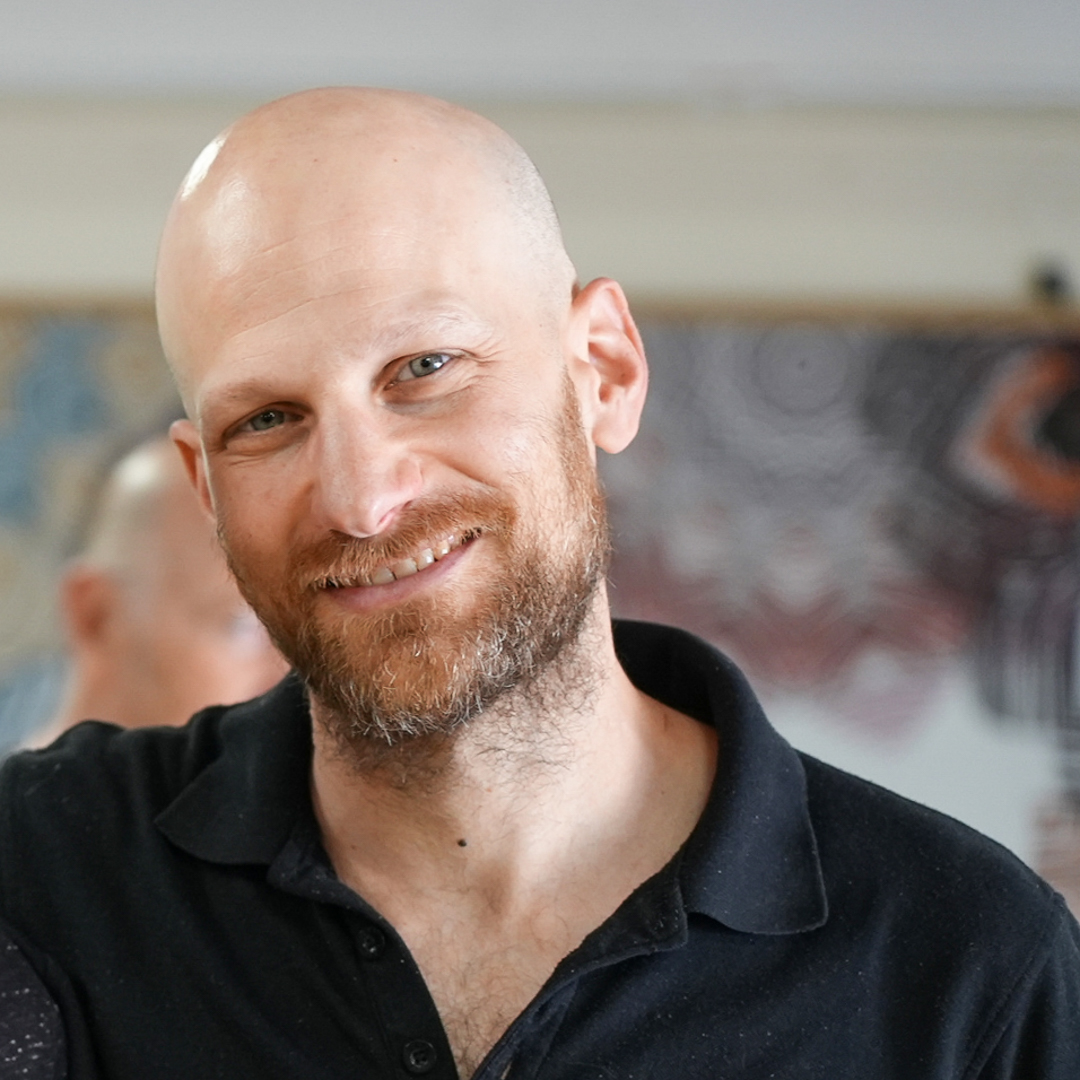
Magen Inon
Magen Inon grew up in southern Israel in the small village of Netiv HaAsara, alongside his parents and four siblings. When on October 7, 2023, Hamas launched a devastating assault on Israeli communities near the Gaza border, it included the village where his parents still lived. Both were killed in the violence. Magen lives in London with his wife and their three children.
On October 7th 2023 I was at home in London looking after my kids when the family WhatsApp group started buzzing, mainly with exchanges between my brother and my dad. My brother was asking, ‘are you okay?’ And then my dad was answering, ‘yeah, we’re in the safe room, we’ve locked the house but we can hear sirens and gunshots’. At first I wasn’t alarmed because this kind of thing happened every so often. But as the hours passed, it became more and more clear that my parents were in grave danger and indeed tragically they didn’t survive the attack.
We didn’t get official confirmation until days later because things were so chaotic but we knew they’d been killed during that first 24 hours because one of their neighbours who survived told us that our house had been directly hit and she saw it burning. I immediately felt the need to be with my brother and sisters. I’m the youngest and the only one living outside Israel, and so on October 8th, I boarded a flight to Israel. We met at my sister’s place in central Israel where we decided to sit shiva. In Jewish tradition, after a loved one dies, traditionally you mourn for a week and invite people over.
That week was insane. We had thousands of people who came to be with us, many because they too had lost loved ones on October 7th. We also have very good links with the Bedouin community, which is a semi nomadic Muslim community in Israel. Some of my dad’s best friends came from that community, and so they were sitting with us too.
The national trauma was at its peak in those first few days. At the same time, we started hearing voices calling for revenge, whether it was government ministers or on social media. For this reason, as a family, we felt the need to say something. We wanted to send a very clear message to the world that we don’t believe revenge creates less violence.
My dad was an agronomist and worked in agriculture and farming. He was a real pragmatist. When you want to grow wheat, you have to be very pragmatic. You plough, sow the seeds and fertilize the land. You do everything just right and then you hope for rain. You wouldn’t farm or sow seeds in the first place if you didn’t have hope for a good outcome. So, despite all the sadness and trauma what I’ve taken from my mother and father – and what I hold most precious – is this idea of hope.
People have tried to silence us in various ways and it comes from both sides. They call us naive, but I think being naive is when people use force over and over again and still don’t achieve security. When we went with the message that we don’t believe in revenge, Palestinians reached out to us saying they wanted to work together with us. This told us we were doing the right thing.
People always talk about justice, but I don’t know what justice or accountability means for my murdered parents, nor do I know what it means for the countless innocent people killed in Gaza. My focus isn’t on how to punish people but on how do I create a safer future for my kids and for the children of Palestine.
For this reason I think forgiveness can be useful because it allows you to look to the future rather than focus always on the past.
I’ve always found it easy to forgive. I think it comes from this pragmatic attitude my father taught me – a realisation that holding onto anger won’t move me forward to a better place. But the fact that I forgive the Hamas terrorists and the people who sent them doesn’t mean they are not responsible. Similarly with the Israeli government – I think they have completely failed the citizens of Israel, before and after October 7th.
All I can really do is try to model this kind of forgiveness by working together with Palestinians, just as all my family are doing. When people see me standing in public next to a Palestinian, they are confused. But being confused is a good place to be educationally because it means that you’re willing to listen.
Sometimes there isn’t anything to grab hold of and then you have to live with the ambiguity and tension, which is something I find less easy to do. But I’m heartened by the psychological research into post traumatic growth that shows how actually after a traumatic experience, people find new abilities, new energy and new meaning. This is something that has happened to me personally, and it’s what we need to have as well on both a community level and a national level.